We provide public workshops in unlearning racism, bystander intervention and other themes that promote equity. Using embodied games and applied theatre techniques, we make space for participants to investigate oppression as it manifests internally, inter-personally and at the institutional levels. The goals of every workshop offered are to identify barriers to equity, increase cultural and interpersonal awareness, and explore best practices for equity and inclusion.
Registration is now open for our newest offering:
white anti-racist practice group
a six-week affinity practice group for white bodied people
Overview
- How did my upbringing shape my racial consciousness?
- What is my body’s racialized stress conditioning?
- How has white supremacy impacted my internal patterning?
- What possibility might blossom through being in conscious relationship with my whiteness and the wider world?
Through six, 90 minute sessions, white-identifying folks will explore internalized unconscious bias and white supremacy ideology. We will use embodied and creative practices to compassionately dismantle internalized white supremacy and expand our capacity for resilience and choice. Participants will engage in a practicum that encourages reflection, curiosity, and compassionate interrogation of subtle and unconscious participation in racist structures for the sake of personal and collective healing.
Who is this course for?
White folks who:
- Immigrated to the US one or more generations ago, and thus have internalized some common aspects of white culture.
- Have an understanding of white supremacy ideology in the US context.
- Are already on a racial healing journey.
- Long for belonging, authenticity, and connection to healthy aspects of ethnic and cultural identity without shame.
- Those who want to nurture healthy multi-racial relationships and understand that that process begins by unearthing and healing internalized white supremacy.
- Those who identify as truth-seekers, disruptors, healers, and/or those who are engaged in social justice.
What you will gain from course participation
- Greater alignment with your anti-racist values.
- Awareness of unconscious biases the body holds and tools for subverting them.
- Greater choice when responding to stress.
- Increased awareness of the ways white dominant norms manifest and tools for de-centering them.
- Connection to a community of like-hearted white folks.
The course runs weekly on Wednesdays from May 15-June 19th from 12-1:30pm ET; 9-10:30am PT.
Marissa Metelica (Facilitator) is a queer, white racial equity consultant, facilitator and healer steeped in the embodied and community-based practices of somatics and applied theatre. She approaches racial healing, consulting, and training from a place of reverence for the wisdom and support of non-human realms that help her to relearn healthy interdependence. She is the architect of Equity Allies, a racial equity training and consulting organization. She is on Board of Trustees at the Kirkridge Retreat and Study Center.
Nichola Torbett (Host) is a white spiritual seeker, recovering addict, gospel preacher, racial justice podcaster, nonviolent direct action trainer, and petsitter. She is committed to helping other white people recognize their own trauma and discontent as catalysts for the dismantling of systems of oppression that are killing us all, and killing Black and Brown people first. She is grateful to First Congregational Church of Oakland and Second Acts as her primary communities of accountability and currently serves as associate director at Kirkridge Retreat & Study Center, where she is experimenting with moving this work forward.
Cost
The cost for participation in this six week course is a sliding scale $60-480 per person, payable to Kirkridge by donation link sent once registration is completed.
Learn more about Kirkridge, the host organization, or the on-going white anti-racist community of practice they hold by clicking the link below.
Past Workshops.
|
|
Curriculum Topics.
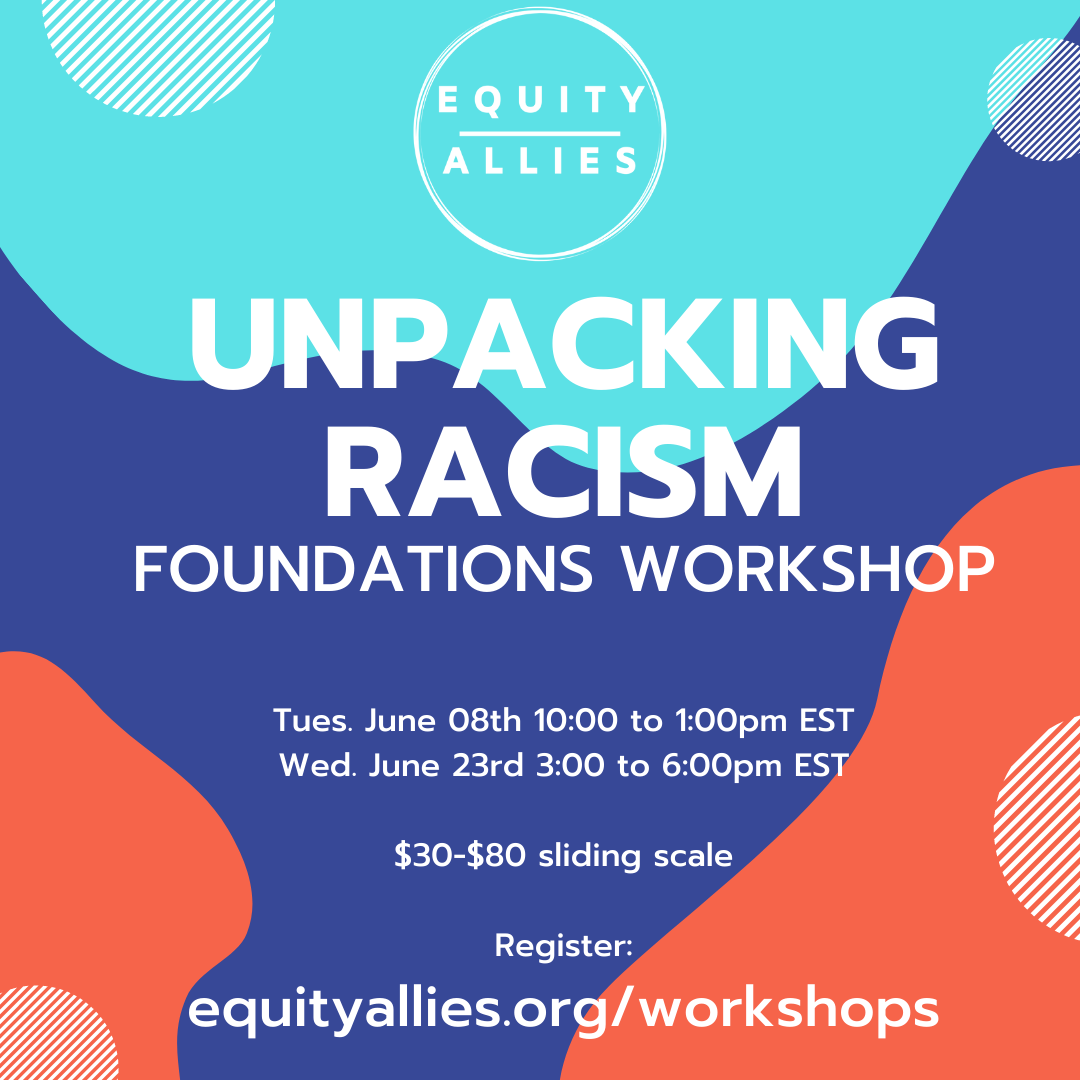
Unlearning Racism
This interactive training will provide delve deeply into issues of race, racism, and whiteness. Through activities, dialogue, and lecture, participants will learn about the historical legacy of racism in the US, increase racial literacy, and investigate unconscious bias. Participants will learn about and practice strategies for interrupting racism on three levels: internally, interpersonally, and institutionally. By the end of the training, participants will have tools, resources, and practice in allyship. Learn more...
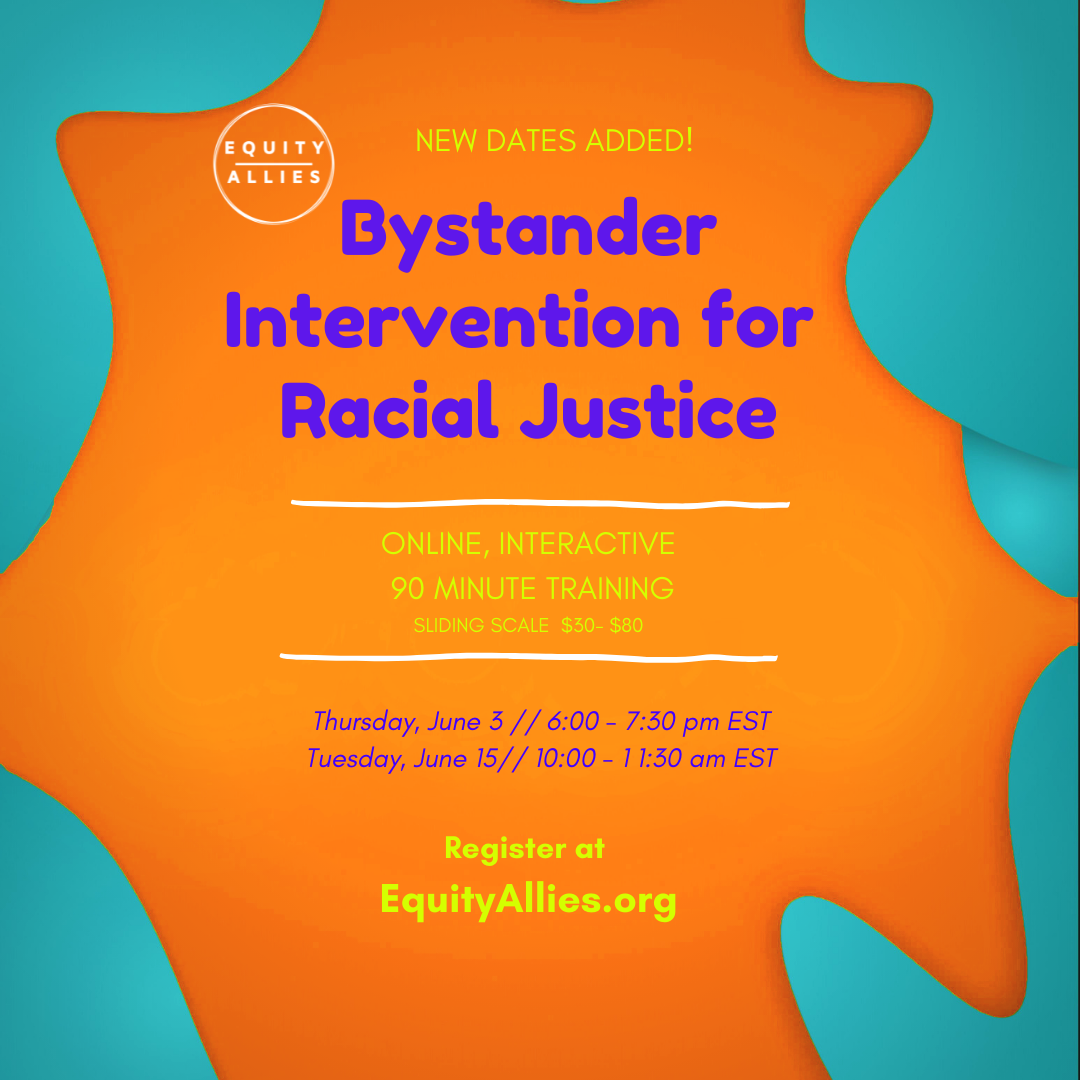
Bystander Intervention
Participants will observe their default nervous system responses and learn to use those responses as assets when disrupting racist behavior in both the public and private spheres. Role play is an effective tool because the nervous system responds in the same ways it would when activated on the street or at a family gathering when someone expresses harmful behavior. Practicing using our body's natural responses when interrupting injustice provides valuable muscle memory, making it easier and more likely that we will advocate for the rights of others when we witness racial injustice in real life. Learn more...
Unconscious Bias
Despite our best intentions, even the most pure-of-heart can make snap judgements that stereotype, generalize, and otherwise diminish the full humanity of another person. While conscious bias can be easier to identify, unconscious (aka implicit) bias is trickier to spot in ourselves and others; and that’s the thing, we all have biases. Unconscious biases are particularly important to work on because they can cause unintended harm to others. In this training, participants will learn to identify conscious and unconscious biases in self and others, learn skills for interrogating and combating bias, and non-violent communication skills to support healthy dialogue around this touchy topic.
This workshop investigates internal, unconscious favoritism and limiting beliefs through theatre games, dialogue and individual written exploration. Participants will explore blind spots where our biases lie and learn best practices for combating them. The goals of this workshop are to augment awareness, increase personal responsiveness, and explore best models for sustainable, responsive, culture-setting. Learn more...
This workshop investigates internal, unconscious favoritism and limiting beliefs through theatre games, dialogue and individual written exploration. Participants will explore blind spots where our biases lie and learn best practices for combating them. The goals of this workshop are to augment awareness, increase personal responsiveness, and explore best models for sustainable, responsive, culture-setting. Learn more...
Power & Privilege
This training investigates issues of power and privilege through theatre games, dialogue and individual written exploration. Participants investigate models of confronting interpersonal, institutional conflict and oppressive behaviors, contextualized within our nation’s historical framework. The goals of this workshop are to augment awareness, increase cultural and interpersonal responsiveness, and explore best practices for inclusion. Learn more...